


Political
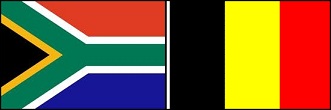
Bilateral relations between the Republic of South Africa and the Kingdom of Belgium remain cordial, structured and forward-looking. The relationship is anchored in shared commitments to democracy, human rights, multilateralism, peace and security, sustainable development, trade and investment, innovation and people-to-people cooperation.
Belgium’s federal constitutional system gives important international cooperation roles to the Brussels-Capital Region, Flanders and Wallonia. South Africa therefore engages both the Belgian Federal Government and the Regions in areas aligned to their respective competencies, including economic diplomacy, innovation, education and training, climate action, transport, ports, science and technology, and cultural cooperation.
Diplomatic relations are managed through established bilateral mechanisms. The Joint Commission of Cooperation (JCC), signed during former President Thabo Mbeki’s Official Visit to Belgium in November 2004, institutionalised formal diplomatic engagement between the two countries. Cooperation has also been advanced through the Memorandum of Understanding on Enhanced Cooperation signed on 10 September 2018 between South Africa’s Department of International Relations and Cooperation and the Belgian Federal Public Service Foreign Affairs.
The Fifth South Africa-Belgium Joint Commission was held in Brussels on 18 December 2024 and reaffirmed the commitment of both countries to deepen bilateral cooperation. The engagement built on the Fourth Joint Commission held in Pretoria on 8 November 2022 and provided a renewed platform for cooperation across political, economic, social and technical areas.
Belgium’s King Philippe and Queen Mathilde undertook a State Visit to South Africa in March 2023 at the invitation of President Cyril Ramaphosa. The visit, accompanied by a high-level Belgian delegation including federal and regional representatives, provided renewed political momentum and highlighted cooperation in trade, investment, academia, research, civil society and community development.
South Africa and Belgium also cooperate through broader multilateral platforms, including the United Nations, the European Union-South Africa Strategic Partnership, the African Union-European Union partnership and global discussions on peace, human rights, development finance, climate resilience and reform of global governance institutions.
Flanders
Relations with the Government of Flanders are guided by the Agreement on Cooperation signed in 2002. The Eighth South Africa-Flanders Joint Committee meeting, held in Brussels on 19 December 2024, underscored the deepening of strategic dialogue and practical cooperation across priority sectors.
Areas of cooperation with Flanders include skills development, education and training, ports and logistics, circular economy, climate and environmental cooperation, innovation, science and technology, water, agriculture, culture and people-to-people exchanges. The partnership is reinforced by Flanders’ representation in Pretoria and by regular technical exchanges between South African and Flemish institutions.
Economic relations, trade and investment
Belgium remains one of South Africa’s most significant European economic partners and continues to feature among South Africa’s important export destinations in Europe. The trade relationship is diversified, with South African exports including organic chemicals, precious stones and diamonds, vehicles and automotive products, machinery, minerals, agricultural products and other manufactured or semi-manufactured goods. South African imports from Belgium include pharmaceutical products, machinery, chemicals, plastics and high-value industrial inputs.
In 2025, Belgium was South Africa’s 10th largest export market and the 3rd largest from within the EU. For Belgium, South Africa is its 42nd most important export partner and its 24th most important source of imports.
The Port of Antwerp-Bruges remains a strategic gateway for South African trade into Belgium and the wider European market. Cooperation in ports, logistics, skills development and training remains an important pillar of the relationship, particularly through exchanges involving South African transport and port stakeholders and Belgian port-sector expertise.
The March 2023 State Visit included a business forum co-organised by South Africa’s Department of Trade, Industry and Competition and Belgian partners. This affirmed Belgium’s position as a major trade and investment partner and created further opportunities for business-to-business engagement in sectors such as logistics, life sciences, clean technologies, energy, manufacturing, infrastructure and innovation.
Within the wider EU-South Africa framework, the European Union remains South Africa’s largest trading partner and largest source of foreign direct investment. This broader EU economic platform is important for South Africa’s engagement with Belgium as an EU member state and as a major logistics, pharmaceutical, chemical and investment hub.
Tourism and people-to-people relations
Tourism remains a practical bridge between South Africa and Belgium. Belgian travel to South Africa has continued to recover from the COVID-19 downturn, supported by South Africa’s strong destination offer in culture, nature, wildlife, wine tourism, heritage, gastronomy, adventure and business events.
People-to-people relations are further supported through academic exchanges, cultural links, the South African community in Belgium, civil society networks and growing interest in South Africa as a destination for study, research, business and tourism.
Education, research, science and technology
South African and Belgian universities and research institutions maintain active cooperation. Engagements include student and academic exchanges, joint research, innovation partnerships, skills development, vocational and technical training, and opportunities linked to EU programmes such as Erasmus+ and Horizon Europe.
The Department of Science, Technology and Innovation and the Belgian Science Policy Office signed a Memorandum of Understanding in 2016 to formalise science and technology cooperation. Priority areas include climate change, marine and Antarctic research, biodiversity and space science. Belgian and South African researchers also cooperate through EU-funded research programmes, including Horizon Europe.
South Africa and Belgian partners have also explored cooperation in trilateral research frameworks, including engagement among South Africa, Belgium and China in areas of mutual scientific interest.
Health, pharmaceuticals, clean technology and energy transition
Health and pharmaceutical cooperation gained visibility during the March 2023 State Visit, including the visit to Afrigen in Cape Town. Cooperation around mRNA technology, biotechnology and vaccine-manufacturing capacity remains strategically relevant for South Africa’s health-industrial base and Africa’s pandemic preparedness.
Clean technology is another forward-looking pillar. The CSIR Battery Test Bed Facility, involving cooperation with the Flemish research organisation VITO, illustrates practical collaboration in battery testing, clean technologies and sustainable development.
The broader EU-South Africa partnership is also creating opportunities in the just energy transition, green hydrogen, renewable energy, transmission infrastructure, connectivity, vaccine production and critical minerals value chains. In March 2025, the EU announced a Global Gateway investment package for South Africa covering the just energy transition, vaccine manufacturing and digital and physical connectivity. In 2025, South Africa and the EU also advanced cooperation on a clean trade and investment partnership and on critical minerals and sustainable value chains, which is directly relevant to Belgium’s industrial, logistics and innovation ecosystem.
Useful Links
– South Africa Department of International Relations and Cooperation (DIRCO); DIRCO
– Belgium FPS Foreign Affairs – Foreign Trade and Development Cooperation
www.diplomatie.belgium.be